
DENTAL IMPLANT
What is a Dental Implant?
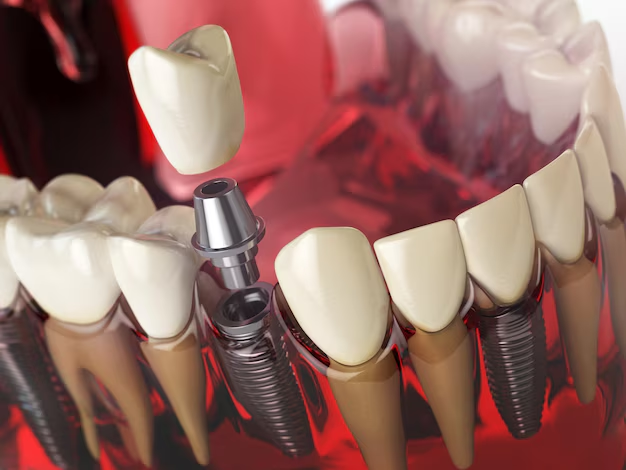
A dental implant is a surgical component that interfaces with the bone of the jaw or skull to support a dental prosthesis such as a crown, bridge, denture, facial prosthesis, or to act as an orthodontic anchor.
Essentially, it’s a replacement tooth root made of titanium or titanium alloy that is placed into the jawbone beneath the gum line.
Once in place, it provides a stable foundation for artificial teeth or bridges.

TYPES OF DENTAL IMPANTS

CONVENTIONAL IMPLANT
takes 2-months to unite with the bone, has three parts, an implant, a screw and an abutment, most commonly used in all cases with good bone in quantity and quality
BASAL IMPLANT
A one piece implant, generally used in condition where the bone is not in good quality and quantity state. Generally used in Full mouth cases, and teeth are fixed wthin 7-10 days.
Why Do You Need Dental Implants ?
1.Missing Teeth: Dental implants are often used to replace one or more missing teeth.Whether due to injury, decay, or other dental issues, missing teeth can affect speech, eating, and the overall aesthetics of a smile.
2. Improved Functionality: Implants provide stability and support for artificial teeth, allowing for improved chewing and speaking abilities compared to traditional dentures or bridges
3. Preservation of Bone: When a tooth is lost, the bone that once supported it can start to deteriorate over time. Dental implants help stimulate bone growth and prevent bone loss in the jaw.
4. Enhanced Aesthetics: Dental implants are designed to look and feel like natural teeth, helping to restore a person’s smile and facial appearance.
5. Long-Term Solution: With proper care and maintenance, dental implants can last for many years, providing a durable and reliable solution for tooth replacement.


TYPES OF TREATMENT AVAILABLE
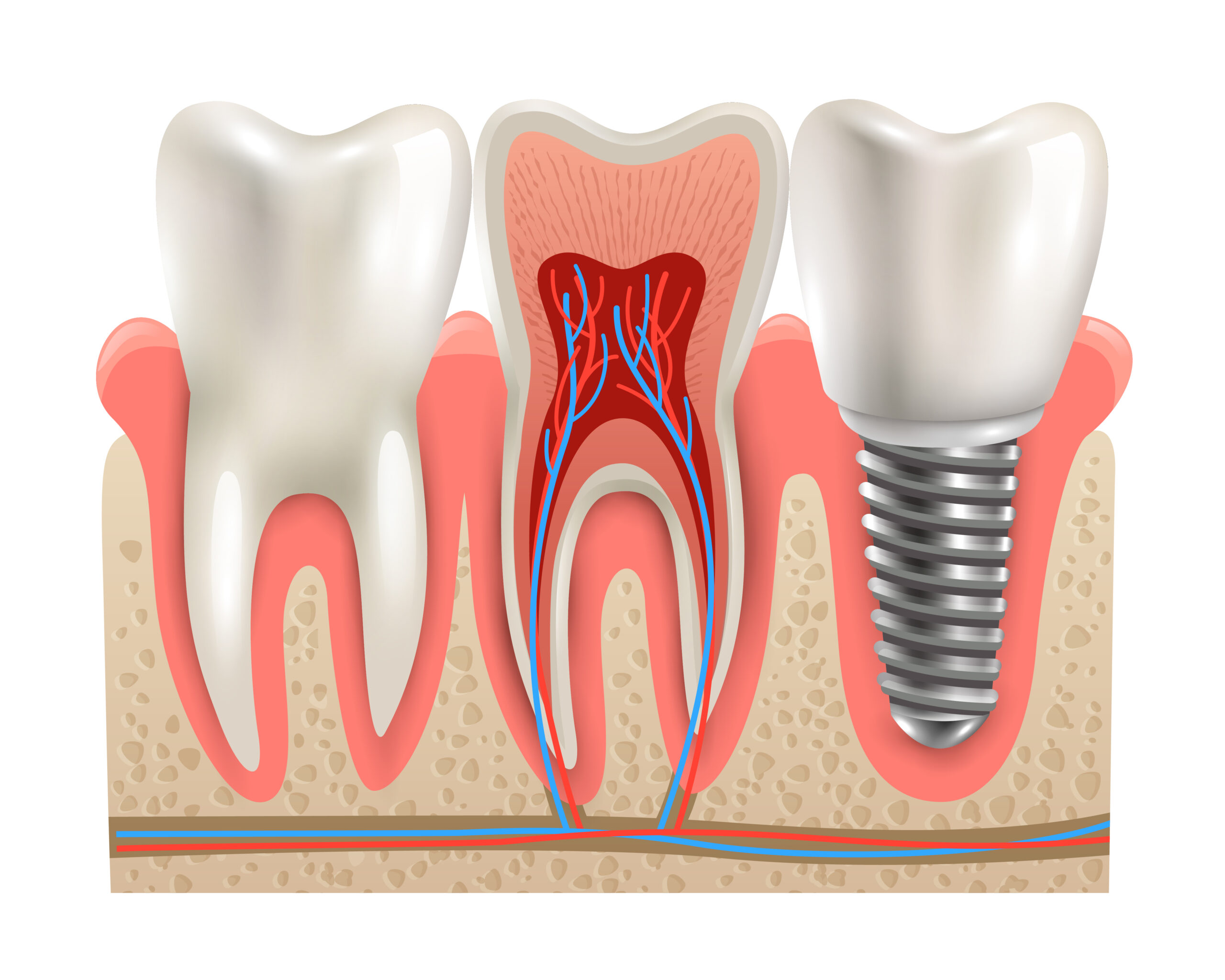
SINGLE TOOTH IMPLANT
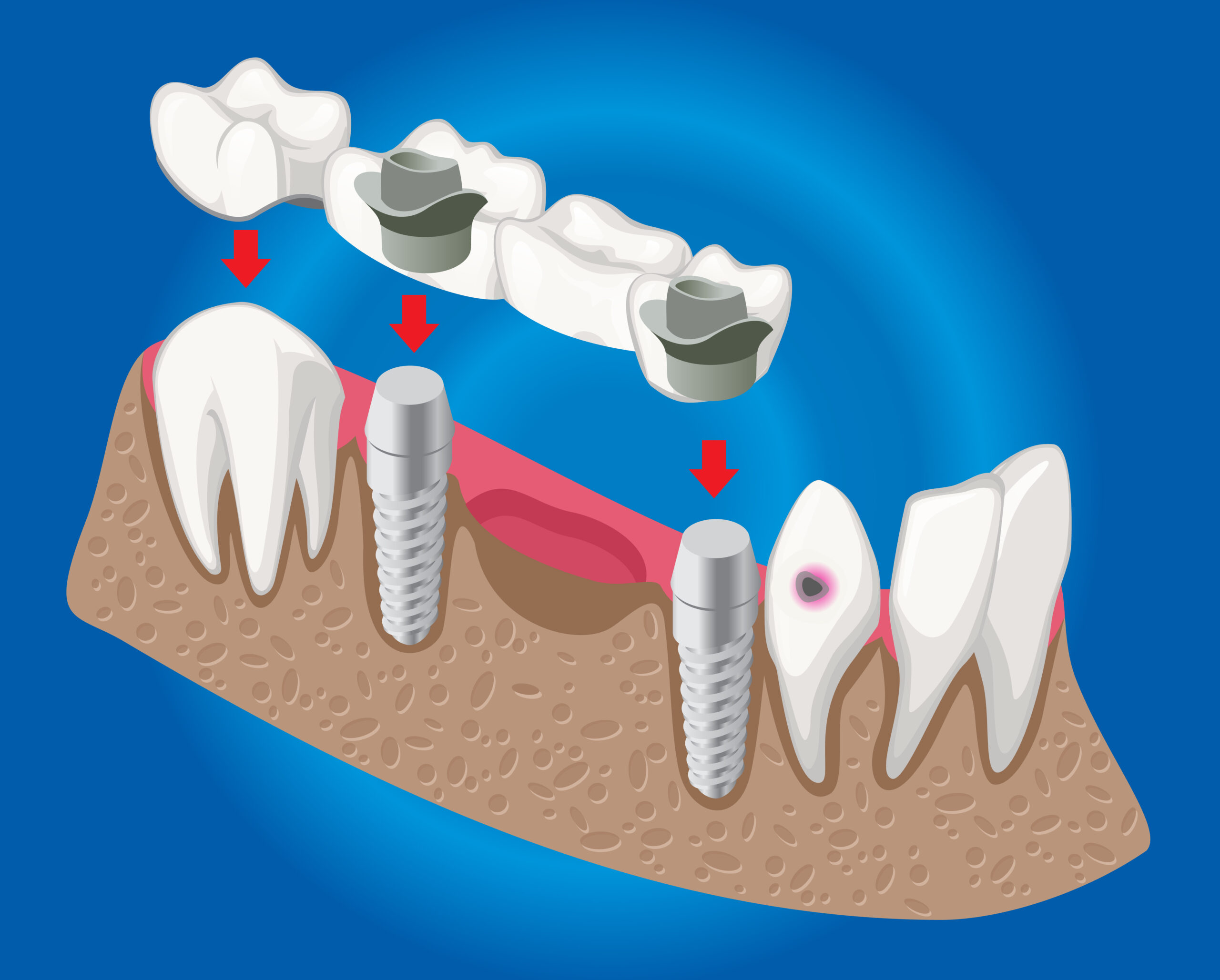
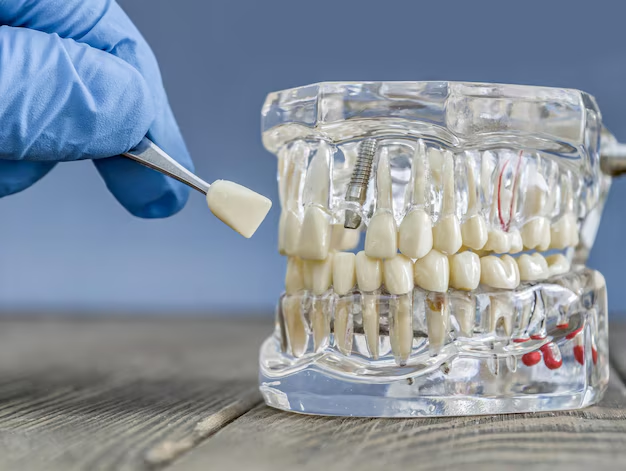
MULTIPLE IMPLANTS BRIDGE
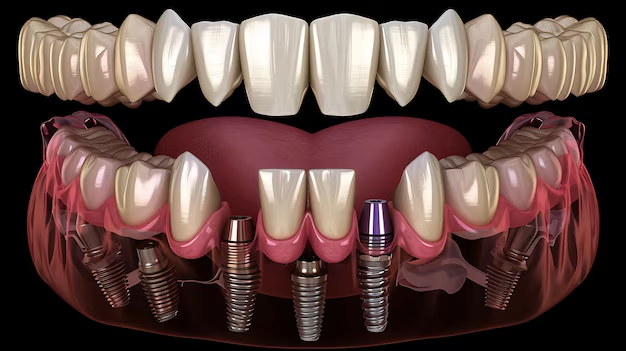
ALL ON FOUR IMPLANT
SINGLE TOOTH IMPLANT
MULTIPLE IMPLANTS BRIDGE
ALL ON FOUR IMPLANT
FAQ
Who is a good candidate for dental implants?
Generally, individuals with good oral health and sufficient bone density in their jaw are good candidates for dental implants. However, each case is unique, so it’s best to consult with a dentist or oral surgeon to determine eligibility.
How long do dental implants last?
With proper care and maintenance, dental implants can last a lifetime. However, factors such as oral hygiene practices, overall health, and lifestyle habits can influence their longevity.
Is the dental implant procedure painful?
The dental implant procedure is typically performed under local anesthesia, so patients should not experience pain during the surgery. Some discomfort and swelling may occur after the procedure, but it can usually be managed with over-the-counter pain medications.
How long does it take to recover from dental implant surgery?
The recovery time can vary depending on the individual and the complexity of the procedure. Generally, it takes several months for the implant to fuse with the jawbone in a process called osseointegration. During this time, patients may be advised to stick to a soft diet and avoid strenuous activities.
Are dental implants expensive?
Dental implants can be more expensive than other tooth replacement options upfront, but they are considered a long-term investment in oral health. The cost can vary depending on factors such as the number of implants needed, any additional procedures required, and the location of the dental practice.
Are there any risks or complications associated with dental implants?
Like any surgical procedure, there are potential risks and complications associated with dental implants, such as infection, nerve damage, or implant failure. However, these occurrences are rare, especially when the procedure is performed by a skilled and experienced dental professional.
Can dental implants be used to replace multiple missing teeth?
Yes, dental implants can be used to replace a single missing tooth, multiple missing teeth, or even an entire arch of teeth. Depending on the patient’s specific needs, different implant-supported prosthetic options, such as implant-supported bridges or dentures, may be recommended.
How do I care for dental implants?
Caring for dental implants is similar to caring for natural teeth. This includes practicing good oral hygiene habits such as brushing twice a day, flossing daily, and attending regular dental check-ups. Additionally, avoiding habits like smoking and excessive alcohol consumption can help maintain the longevity of dental implants.

- F-36 basement, Max hospital, Press Enclave Marg, opposite gate number 5, Gandhi Park, Hauz Rani, Saket, New Delhi, Delhi 110017
contact@shiningdentistry.com
+91 9999353118
Website by Socialkey Guru